
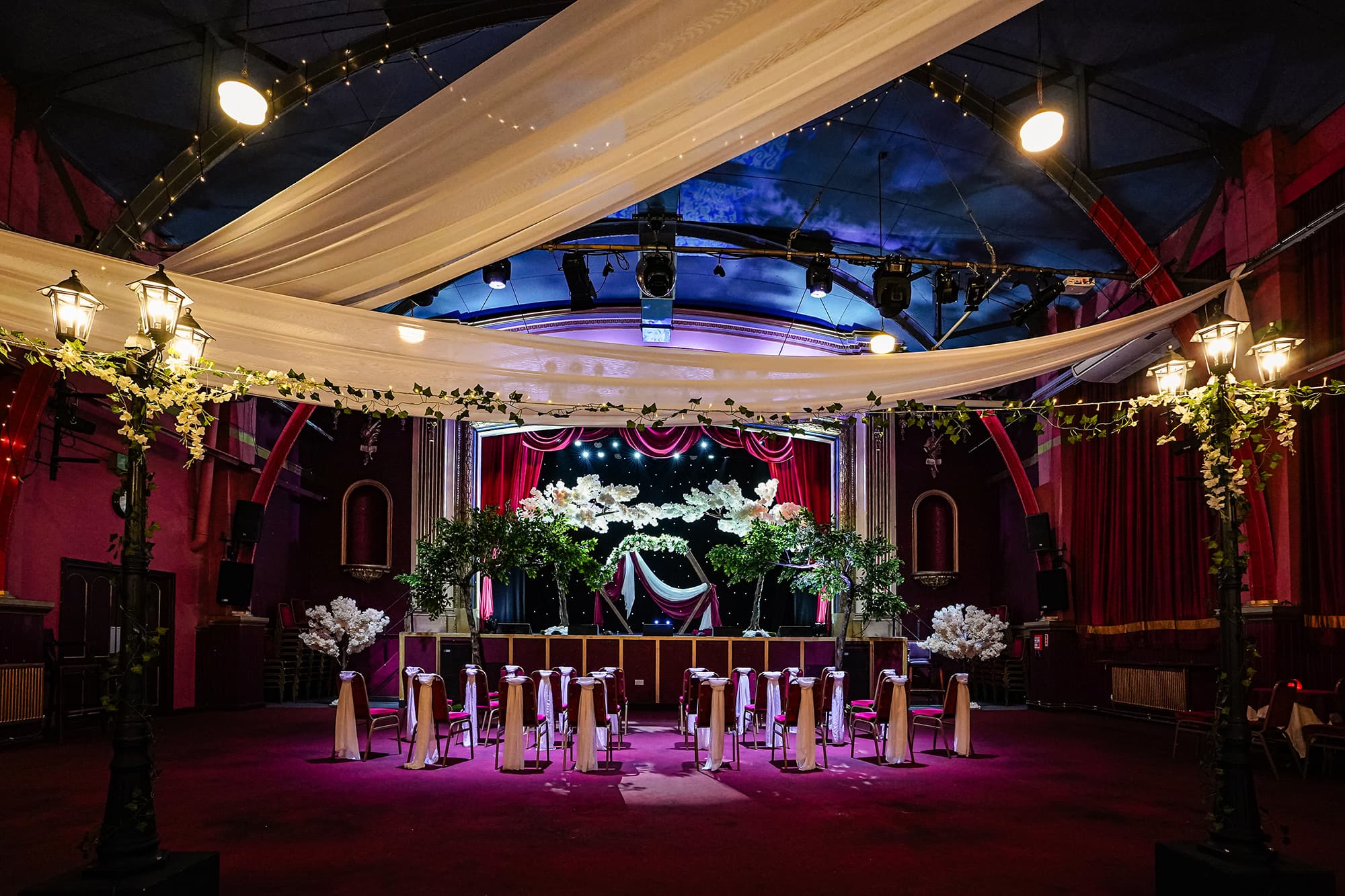
A celebrant-led wedding gives you room to tell your story in your own way. Instead of working from a fixed ceremony script, you can build the occasion around the people, music, readings and promises that matter to you. At Gorleston Pavilion Theatre, that ceremony can unfold on an Edwardian stage before the auditorium becomes the setting for your reception and evening celebration.
What is a celebrant-led wedding ceremony?
A wedding celebrant works with you to create and lead a personal ceremony. It might include the story of how you met, your own vows, readings from family and friends, live music, symbolic rituals or a moment that reflects your shared interests.
A celebrant-led ceremony is different from the legal marriage itself. In England and Wales, a civil marriage normally takes place at a register office or premises approved by the local council, with a registrar present. The government's current requirements are set out in its guide to planning a marriage or civil partnership ceremony.
Can you legally get married at the Pavilion?
The Pavilion is not currently licensed to conduct the legal marriage ceremony, although we are in the process of applying for a wedding licence. For now, couples complete the legal ceremony at a register office or another approved venue, then hold their celebrant-led ceremony and reception at the Pavilion.
Some couples keep the legal appointment small and practical, while treating their Pavilion ceremony as the moment they exchange personal vows in front of all their guests. Always confirm the legal arrangements directly with the relevant registration service before making bookings.
How to plan your celebrant-led ceremony
- Arrange the legal marriage. Decide where and when you will complete the legal formalities, allow time to give notice, and confirm the requirements with the registration service.
- Choose your celebrant. Meet more than one if you can. Look for someone whose manner suits you and who is comfortable leading a ceremony in a theatrical space.
- Build the ceremony together. Your celebrant can help shape the running order, write transitions and find a comfortable balance between warmth, humour and formality.
- Plan the entrance and staging.Think about who enters from where, where your wedding party will stand, and how you want to use the Pavilion's stage lighting.
- Rehearse the important moments. You do not need to rehearse every word, but entrances, music cues, readings and any symbolic elements benefit from a simple run-through.
Ideas for making the ceremony personal
- Write your own vows or promises to one another.
- Ask friends or relatives to contribute a reading.
- Use live music for your entrance, signing moment or exit.
- Include a handfasting, ring-warming or unity ritual.
- Recognise children, parents or absent loved ones.
- Use theatre lighting to change the mood for key moments.
- End with an upbeat stage exit into your drinks reception.
Your celebrant can advise which ideas work well together. A ceremony does not need to be long or complicated to feel meaningful; a clear, confident 25 to 40 minutes often gives every element enough space.
Why a theatre works so well
A theatre already has a natural focal point. Guests face the stage, entrances feel momentous, and professional lighting helps create an atmosphere without requiring an elaborate temporary structure. At the Pavilion, the burgundy auditorium, theatrical details and Edwardian character provide a ready-made visual identity.
After the ceremony, guests can enjoy drinks while the room moves into its reception layout. The same building provides cabaret-style dining, a dance floor, a staffed bar and space for live entertainment. The Bandstand, Pier Gardens and seafront are immediately outside for group photographs and portraits.
Your ceremony planning checklist
- Legal ceremony, notice and registration arrangements confirmed
- Celebrant booked and ceremony-writing meetings scheduled
- Vows, readings and music selected
- Wedding party positions and entrance route agreed
- Stage layout, chairs and lighting cues confirmed
- Accessibility requirements discussed with the venue
- Photographer and videographer briefed on the running order
- Any printed ceremony programmes prepared
- A simple rehearsal arranged if required
Continue planning your Pavilion wedding
Explore our Norfolk wedding venue packages for current prices, capacity, photographs and optional extras. If a weekday celebration could work for you, our guide to affordable midweek weddings in Norfolk explains how to plan the wider day.
Imagine your ceremony on our stage
Tell us your preferred date and approximate guest numbers, and our wedding team will help you arrange a viewing.